
An editorial style sheet is a tool used by editors and publishers to ensure consistency within a manuscript as it passes through a single round or multiple rounds of editing.
Editors use style sheets to keep track of details such as rules for comma usage, how to treat numbers, how quotes should be formatted, and many more details that often go unnoticed until something looks off.
However, when working with fiction or creative nonfiction, extra details are often included in a style sheet, including the specifics about a character’s appearance, or a setting. Nothing draws a reader out of an immersive experience more than the post office magically lifting off the ground and moving to the other side of town (unless that’s intentional).
Ultimately, a style sheet is a quick reference for editors, so we do not have to memorize every detail about the work.
Praesent euismod, orci id dictum placerat, lorem sem ultricies ligula, at bibendum velit risus a erat. Nulla facilisi. Donec at dignissim lorem. Fusce tempor turpis id risus posuere, vel aliquet risus fermentum. Nam vulputate sem at erat consequat, vitae malesuada turpis efficitur. Phasellus non odio vitae sem suscipit volutpat. Donec feugiat lorem sit amet lacus convallis, a pretium lectus volutpat.
Vestibulum ante ipsum primis in faucibus orci luctus et ultrices posuere cubilia curae; Duis eu sem quis massa luctus gravida. In in purus ut nunc faucibus aliquet. Morbi tristique lorem a est cursus, non dignissim ligula bibendum. Sed id luctus augue. Curabitur blandit, mauris a interdum luctus, sapien nisl hendrerit arcu, sit amet condimentum turpis neque non nisi.
Why Writers Should Use Style Sheets
At the bottom of this post, you will find a template for a style sheet designed for authors of fiction or creative nonfiction.
Is it counter-intuitive to suggest that writers use style sheets? I, an editor, certainly don’t want to make myself obsolete.
And yet, there is so much more to using a style sheet as an author than keeping track of details and ensuring consistency. I have broken my template into four categories, but a style sheet is versatile. I encourage you to play around with your own categories.
Character
Yes, you want to make sure that your protagonist doesn’t de-age from one chapter to the next. But tracking your characters helps you develop them. A style sheet gives you that bird’s eye view that might cause you to say, “Maybe there is more than hazel eyes.” Moreover, a style sheet helps you develop and track a character’s quirks. Do all your characters play with their hair? Could this be something one character does when nervous? Do all your characters speak in broken sentences? If so, cut back on the ellipses. How many of your characters speak exclusively with exclamation marks? These character quirks can be a tell that you, the writer, need to get out of your body a bit more. But more than that, they help you understand your characters’ demeanours and engage with them as if they are sitting around a table with you. Why does Kayla always speak in long, tangential sentences? Maybe you, the author, didn’t realize that she is actually trying to hide something.
Finally, I included a column for you to explore your characters’ wants, allowing you to see how they play off each other. Being aware of even minor characters’ wants is instrumental for a compelling read.
Timeline
Many writers do not write a linear story. Between switching points of view (POVs), flashbacks, and backstories that sometimes don’t make it into the final draft, the worlds you create—real or imagined—are complex. Many times, I have described a character bundled in a coat, scarf, and toque, only to realize later that it is the middle of July in Toronto and said character would probably pass out from the heat. But, again, creating a timeline is more than accuracy and consistency: it allows you to have a clear picture of where your story may be rushed and where it may be dragging. When editors, publishers, and readers talk about “pacing issues,” they often mean that there are too many events or too few crammed into a specific timeframe. A style sheet is the tool to create that “just right.”
Unique Words
The third category is unique words. For editors, this is a valuable tool when a manuscript is passed from one editor to the next. For authors, this can once again ensure you are spelling place names consistently, or accounting for regionalisms. More than that, this category in the style sheet is where you can pause and reflect on your linguistic creations.
This is probably most apparent in sci-fi and fantasy, where invented languages roam free, but I think it has value in other forms of fiction and creative nonfiction. Perhaps, you are too reliant on accents and need to tone it down. Maybe you are delving too deep into your fascination with marine biology and need your book to be more accessible. If you are writing contemporary fiction, and you recreate a message board or social media conversation, how do you write out the usernames that are sometimes a combination of symbols? How will this look or sound to your readers? Keeping track of unique words helps you get into your readers’ heads and see or hear the book through their eyes or ears.
Variation
Another use of “unique” words could be “squirrely” words. Sometimes, for the sake of authenticity, we include language that, in other contexts, would be inappropriate. Tracking in your style sheet which words you use that may offend or trigger can help you clearly evaluate how your book is serving your intended audiences.
Writing
Finally, I have included the more “standard” template that an editor will use for their style sheet. This is where you track the mechanics (punctuation and formatting). While editors are essential for improving any work’s writing, noticing and honing your style as a writer is truly beneficial. How you use punctuation or how you envision dialogue is informed by your reading habits and your speaking habits. By understanding your voice, you can lean into it and tailor the stories you tell to your unique voice. This is how you stand out in the crowd. A style sheet is a first step to helping you think about your mechanics and how they can be refined.
Conclusion
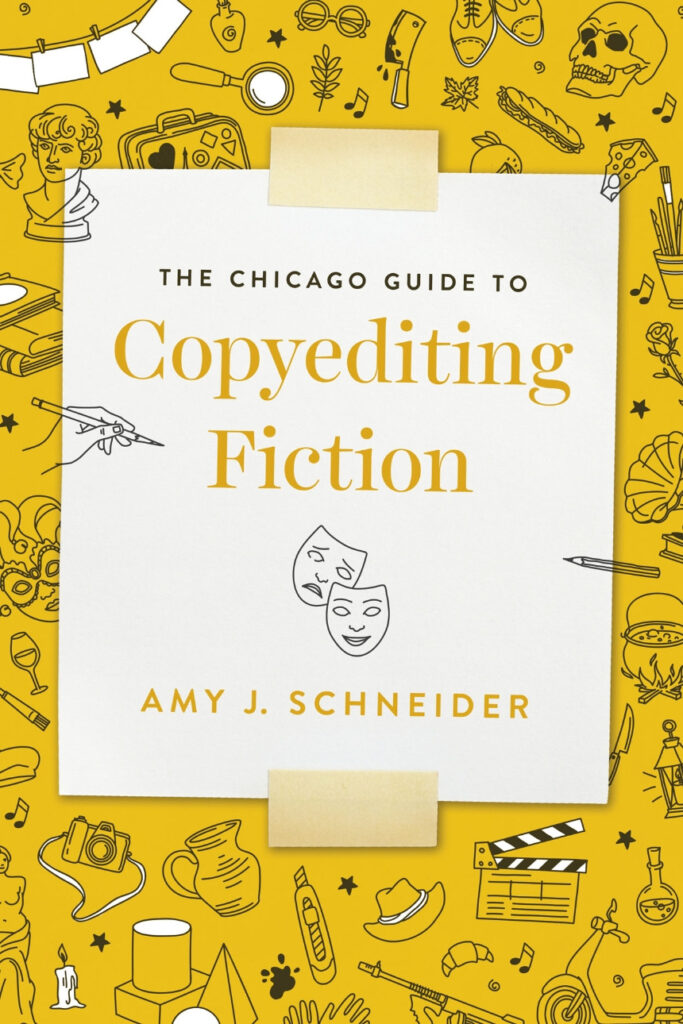
Amy Schneider goes into far more detail about how to create a fiction style sheet in her book, The Chicago Guide to Copyediting Fiction. Yes, it is written for copyeditors, but don’t be afraid to peek behind the curtain if you are a writer. Writers and editors do their best work together: a greater understanding of both processes improves the overall manuscript. Schneider also covers other categories, such as setting and dialogue, and how fact and fiction work together. I think it is a valuable tool for writers (particularly fiction) as it is for editors.
Style sheets are as much about reflection as they are about organization and consistency. A style sheet allows you to see the proverbial forest through the trees—as you stroll or hack your way through the forest that is your book, sometimes the trees can obscure much.
I think you can start creating your style sheet while writing a first draft, but I wouldn’t put too much thought into it until a second draft, where the refining truly begins.
You can find my template here. It is intentionally simple and meant for you to adjust to your book’s needs.